
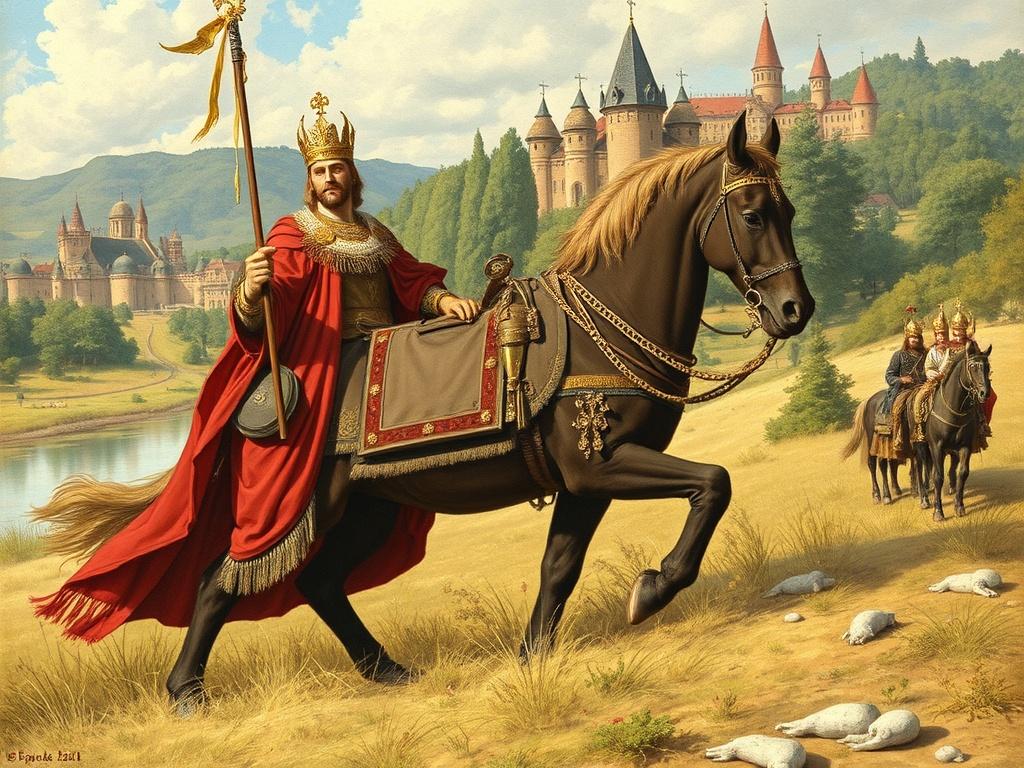
Few chapters in medieval Eastern Europe shine as brightly as the era attributed to Ярослав Мудрый and расцвет Киевской Руси. This story is not only about battles and borders; it’s a meticulous braid of law, faith, trade, and culture that turned Kyiv into a beacon of civilization on the northern edge of Byzantium’s influence. The period is remembered as a time when cities grew, scholars gathered, and rulers learned to balance power with diplomacy, faith with reason, and tradition with reform. In this article, we’ll walk through the threads that wove together a remarkable moment in history, tracing how leadership, imagination, and practical governance helped shape a civilization that still echoes in modern memories of Ukraine and its neighbors.
Ярослав Мудрый: путь к власти и зрелость лидерства
Ярослав, the son of Vladimir the Great, entered the chronicles as a figure who transformed dynastic turbulence into a steady, strategic ascent. His early years were shaped by the rough politics of a fractured land, where principalities rose and fell with the shifting tides of succession. But the young prince demonstrated a knack for aligning interests, both within family circles and among Kyiv’s broader elites. When he finally secured his grip on the capital, he did not merely sit on a throne; he set out to create a coherent system for governance, a framework capable of sustaining unity across vast and diverse lands.
What makes this period compelling is how quickly leadership responsibilities evolved into a public project. Ярослав did not champion power for power’s sake. Instead, he framed rulership as a service to merchants and farmers, clergy and scribes, soldiers and artisans. His approach blended firmness with practicality: clear laws, predictable taxation, and a network of loyal nobles who shared a sense of common purpose. The result was a more stable Kiev and a court that became a center for policy, culture, and institutional growth. This is not merely a biography of a prince; it is a portrait of a state learning to govern itself with ambition and humility in equal measure.
Политика и дипломатия: союзники и границы
Under Ярослав’s leadership, Kyiv’s political theater shifted from improvised power plays to a deliberate balance of regional interests. Diplomacy emerged as a central tool, used to secure trade routes, stabilize borders, and raise Kyiv’s status among neighboring powers. The prince cultivated alliances through marriage, religious patronage, and careful negotiation, weaving Kyiv into a web of relationships that helped dampen external threats and expand opportunities for commerce and cultural exchange.
Scholars highlight how this era foregrounded the idea that a city-state could thrive not only through military might but through networks—economic, spiritual, and political. By maintaining cordial ties with Byzantium, Poland, and other regional actors, Kyiv could access goods, technologies, and ideas that enriched daily life and public institutions. The diplomatic posture also fostered a climate in which urban growth felt legitimate and supported, a critical factor in the emergence of a robust mercantile class and a more layered social structure.
Культура и образование: школа, книги и право
One of the most enduring legacies of this period is the deepening of literacy, law, and learned discourse. Ярослав’s court became a magnet for scribes, clerics, and scholars who translated and compiled texts from Greek and Latin into Slavic languages and dialects. The resulting surge in literacy fed not just religion but administration, law, and culture itself. The court’s libraries helped standardize written forms of governance and public communication, contributing to a shared civic memory that could bind diverse communities into a unified polity.
Education and culture did not exist in a vacuum. They supported practical governance: better record-keeping, clearer legal processes, and more effective tax collection. The creation of curated texts, sermons, and legal compilations also provided a common moral and intellectual vocabulary for rulers, judges, merchants, and peasants alike. In short, literacy ceased to be a privilege of clerics and nobles; it spread through towns and monasteries, fueling city life and enabling Kyiv to become a hub of creativity, trade, and administrative efficiency.
Церковь и архитектура: храмовая вспышка
Religion and church-building were not mere acts of piety; they were instruments of state-building. The Orthodox Church, aligned with the Kyiv authority, became a visible embodiment of order and continuity. Grand churches, sacred schools, and monastic communities organized urban life around shared rituals, calendars, and patronage networks. The construction of monumental churches, including the renowned Saint Sophia complex in Kyiv, signified more than architectural ambition—it signified a civilizational project in which faith and public life harmonized to create a durable cultural landscape.
Architecture became a language of legitimacy. The stone cathedrals, illuminated by mosaics and icons, told a story of a people who valued memory and tradition as strategic resources. Monastic houses fostered learning, manuscript production, and social welfare, turning religious institutions into centers of care, education, and civic identity. The church’s influence reached into law and governance, guiding ethical norms and public behavior, while also attracting traders and pilgrims who helped Kyiv flourish as a crossroads of faith and commerce.
Экономика и торговля: Киев как центр ремесел и торговли
Trade routes along the Dnieper and into the Black Sea connected Kyiv with Byzantium, the Arab world, and northern Europe. This commercial geography fed urban growth: markets filled with goods, artisans honed specialized crafts, and merchants learned to navigate a complex network of grain, furs, wax, and metals. currency and credit practices matured, expanding the city’s capacity to finance ambitious projects—from fortifications to churches to public baths.
Alongside trade, urban planning and governance addressed the needs of a bustling economy. Towns grew around harbors, river ports, and market squares, while the state protected travelers, ensured fair weights and measures, and maintained the safety of caravans and ships. The result was a city that could absorb shocks—famines, fires, or raids—without losing its vitality. In this sense, the economy of the era didn’t merely support luxury; it underwrote a social and cultural flowering that gave Kyiv its distinctive character as a cosmopolitan capital.
Военная система и безопасность: защита и расширение границ
Security was inseparable from prosperity. Ярослав understood that a thriving capital required reliable borders and credible defense. His policies combined fortifications, military reforms, and strategic diplomacy to deter raiders and maintain continuity of rule across a broad, ethnically diverse realm. The emphasis was not solely on conquest but on sustaining a stable, manageable frontier that allowed commerce to flourish and communities to feel secure enough to invest in long-term projects.
Military organization benefited from administrative clarity: clear succession rules, predictable taxation to fund defense, and a professional cadre of warriors trained to operate across a range of environments. Even when external threats receded, the state maintained readiness, ready to defend roads and rivers that linked Kyiv with a wider world. The security framework, in turn, created an atmosphere of confidence that encouraged artisans, merchants, and scholars to participate in the city’s growth, weaving defense into daily life rather than treating it as a separate, looming chore.
Наследие в хрониках и памяти
The chroniclers who documented this era often frame it as a high point in the history of the eastern Slavic lands. The narratives—written by scribes near the end of the first millennium and into the next—told stories of wise governance, religious renewal, and cultural revival. These chronicles helped cement a national memory, offering future generations a model of leadership that balanced courage with prudence, piety with curiosity, and ambition with communal care.
In addition to formal chronicles, a burgeoning body of lore, legends, and commemorations carried the name of Ярослав Мудрый across centuries. Saintly reputations and heroic tales surrounded him, feeding public imagination and inspiring later rulers to imitate aspects of his model: patronage of culture, protection of the vulnerable, and steadfast defense of sovereignty. The enduring impression is not merely of a single ruler but of a period in which Kyiv’s rulers learned to think long-term about their city’s role in a larger world.
Образ правителя в народной памяти и легендах
What makes the memory of this era so vivid is the way people retell its stories. The image of Ярослав as a prudent, far-seeing sovereign who balanced strength with mercy persists in folk songs, chronicles, and regional histories. His reputation as a builder—of laws, churches, schools, and bridges between cultures—remains a reference point for generations seeking a model of responsible leadership in times of change and challenge.
These legends are not mere romantic myths; they echo a lived tradition that valued public service, education, and a shared civic space. Even as borders shifted and political systems evolved, the core idea endured: a city’s greatness grows when its rulers invest in institutions, cultivate knowledge, and nurture the social fabric that binds diverse communities into one society with a common future.
Личность Ярослава: характер правителя
People who study Ярослав Мудрый emphasize a complex persona: a leader who combined decisiveness with patience, ambition with restraint. He was not a flashy conqueror but a strategist who recognized that durable power rests on legitimacy, legitimacy rooted in law, faith, and visible public works. This blend of pragmatism and aspiration gave him room to experiment, test ideas, and adjust tactics as circumstances shifted. The result was a ruler who could be both firm in defense of Kyiv’s autonomy and open to new ideas that would strengthen the city’s bonds with faraway partners.
What stands out in biographical sketches is not just the triumphs but the tension—the balancing act between central authority and regional autonomy, between preserving tradition and inviting reform. That tension, managed with care, produced a culture in which people believed their city could be a place where ancient values and new opportunities could coexist. It’s a telling reminder that leadership, at its best, is less about stamping one’s will on a place than about guiding a living system toward a shared, sustainable future.
Практический взгляд: уроки для современного города
Reading this history through a modern lens yields practical insights for contemporary urban life. The Kyiv of Ярослав’s time teaches the value of institutions that endure—laws that are clear, courts that are accessible, schools that reach beyond elite circles, and religious and cultural centers that anchor a common identity. It’s a reminder that a city’s vitality rests not only on its economy but on the quality of its public life: predictable governance, honest administration, and a willingness to invest in infrastructure that sustains growth across generations.
Additionally, the era underscores the power of diplomacy as a governance tool. In a world where threats often emerge from a lack of connection, creating channels of dialogue with diverse partners can prevent conflicts and open doors to collaboration. The idea that a city or a realm can expand its influence by weaving a network of alliances—economic, cultural, and spiritual—remains relevant in today’s interconnected landscape.
Список ключевых аспектов эпохи
- Centralized governance built on a responsive legal framework.
- Strategic diplomacy that balanced regional powers and expanded trade.
- Religious patronage that catalyzed cultural and educational initiatives.
- Urban and architectural investments that signaled legitimacy and prosperity.
- Chronicling and memory that preserved a model for future leadership.
Таблица: ключевые ориентиры эпохи Ярослава
| Сфера | Ключевые события | Значение |
|---|---|---|
| Политика | Укрепление единства княжеств, систематизация управления | Системная основа для долгосрочной стабильности |
| Дипломатия | Культурно-торговые связи с Byzantium и западной Европой | Расширение торговых путей и усиление статуса Киева |
| Культура и образование | Появление сборников и переводной литературы, Izbornik | Повышение грамотности и расширение интеллектуального пространства |
| Церковь | Строительство храмов, монастырей, развитие духовной жизни | Формирование общественной идентичности и моральной основы законности |
| Экономика | Развитие торговли и ремесел, усиление городских рынков | Ускорение роста городов и благосостояния населения |
Эпилог эпохи: продолжение и исчезновение локального золотого века
Говоря о периоде Ярослав Мудрый, мы не видим простой линейной истории. Это было время, когда Киев превратился в язык взаимодействия между Востоком и Западом, когда государство училось управлять большими пространствами и множеством культур. После жизни Ярослава и его ближайших союзников начался процесс распада, который позже усложнил жизнь региона. Но даже в этом последующем сложении многие принципы, заложенные тогда, — законность, грамотность, способность к дипломатии и активная гражданская позиция — продолжали жить в памяти людей и в зачатках будущих институтов.
Сегодня мы видим, как память о «Ярослав Мудрый и расцвет Киевской Руси» превращается в источник вдохновения для исследователей, архитекторов, педагогов и политиков. Это не романтическая легенда, а напоминание о важности баланса между силой и совестью, между амбициями и служением обществу. В глазах истории такой баланс остаётся живым ориентиром, который напоминает: величие города или страны измеряется тем, как они обращаются со своей историей и как строят будущее, не забывая о прошлом.