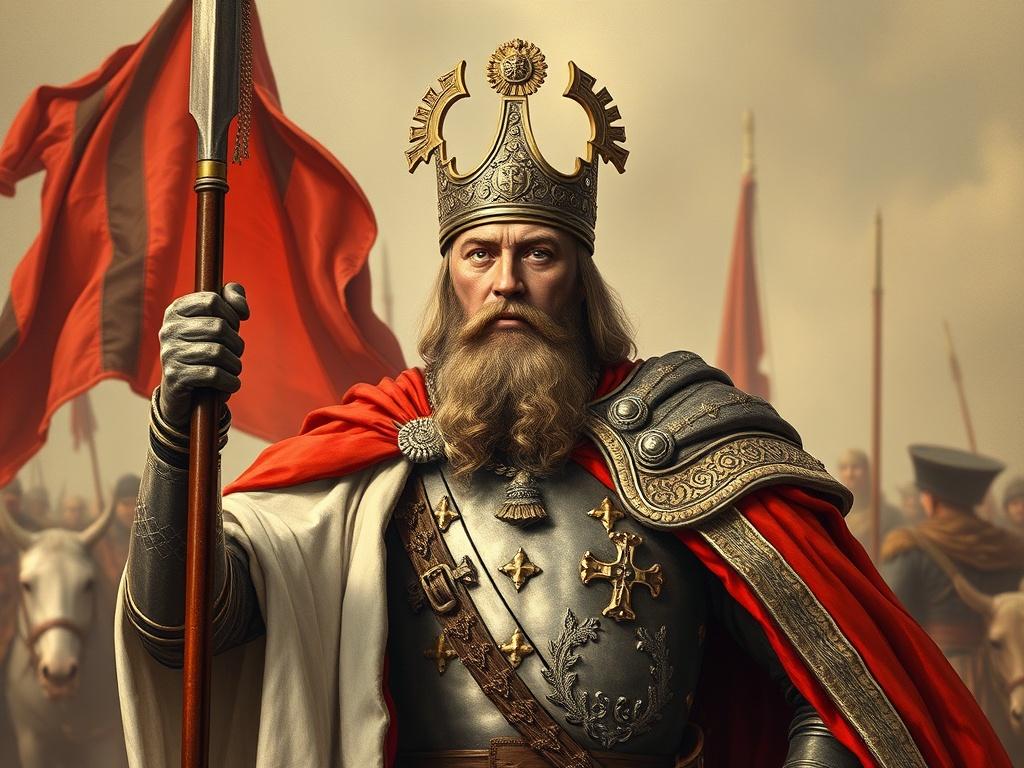
In the tapestry of medieval Russia, few figures loom as large as the prince who could hold a country together with a sword in one hand and a treaty in the other. Alexander Nevsky’s life reads like a carefully balanced opera: moments of fierce combat interwoven with delicate diplomacy, victories earned on ice and snow, and strategems whispered in the halls of power. This article threads together military ingenuity, political savvy, and a stubborn pragmatism that helped shape the trajectory of Rus’ during a time of pressure from east and west alike. The phrase Александр Невский: полководец и дипломат—often cited in Russian histories and modern retellings—captures the dual nature that defined his leadership. But to understand him fully, we must walk the path from his beginnings to his lasting influence, not merely recite a label.
Origins and ascent: a prince’s path through a fractured land
Alexander was born into a world where power flickered along rivers and frontier marches. The young prince learned quickly that loyalty in Novgorod came wrapped in obligations, while the surrounding duchies and the Mongol overlords’ demand for tribute forced every decision to be a calculation. The political map of 13th-century Rus’ was a mosaic of city-states and principalities—each keeping its own traditions, customs, and military practices—yet all answerable, at least in theory, to a distant, unstoppable power beyond the steppe.
When danger arrived in the form of northern and western invaders, Alexander showed an instinct for timing that would define his career. He was adept at reading not only the battlefield but the mood of his people: when to strike, when to parley, and when to accept a safer, less glorious path that still protected lives and livelihoods. His rise to prominence was as much about understanding the pulse of Novgorod as about displaying martial prowess; leadership in that era required a blend of courage, patience, and the ability to navigate rumors, feints, and shifting alliances.
The battles that forged his reputation
The battle of the Neva and the defense of Novgorod
The year 1240 brought a test that would become part legend and part practical lesson for the nascent state. A Swedish invasion threatened to spill into Novgorod’s lanes and trade routes, a disruption that could topple a fragile, hands-on governance in a city that thrived on commerce, craft, and comparative openness to outsiders. Alexander’s response was swift and decisive, turning the river and bank into a theater of tactical advantage. His victory—achieved not merely by brute force but by exploiting terrain, timing, and the element of surprise—sent a clear message: Novgorod would defend itself, and the balance of power in the region would tilt in favor of those who could read the land as well as the law.
That outcome did more than save a city; it shaped a doctrine. It established a pattern in which military action and civic resolve were coordinated to protect the civic space that sustained prosperity. The defense of Novgorod became a reference point for how to respond to external aggression without surrendering the city’s customary rights and privileges. It also laid the groundwork for Nevsky’s reputation as a capable guardian who could mobilize resources quickly and motivate a diverse urban population to stand together when faced with outside threats.
The Battle on the Ice: a symbolic and strategic turning point
Around the snowy expanse of Lake Peipus, another chapter unfolded—one that would echo through centuries of Russian memory. The confrontation with the Livonian Order, fought on the ice in the early 13th century, demonstrated that tactics born from alliance-building and decisive, patient leadership could outmaneuver a disciplined, external force even on a seemingly inhospitable surface. The battle’s outcome reinforced a broader strategic principle: success in this era depended not just on who possessed more cavalry or fortifications but on who could maintain cohesion under pressure and keep the moral nerve of a community intact.
For Nevsky, the ice match was not merely a military victory; it was a demonstration of restraint and calculated risk. He understood that a hard-wited, brute-force approach could provoke deeper, more costly conflicts with powerful neighbors. Instead, he combined deterrence with a willingness to engage in dialogue, using force when it protected what mattered most and diplomacy when it could preserve a fragile peace. The lessons of this conflict would resonate in later decisions when Russia faced new combinations of threat and opportunity from the west and from neighboring frontier peoples.
The diplomat in a dangerous era: balancing two mighty imperatives
Diplomacy with the Golden Horde and the politics of tribute
One of the defining tensions of Nevsky’s era was the undeniable dominance of the Mongol rulers over the Rus’ lands. The Golden Horde did not simply impose tribute; it set the terms under which cities could thrive or falter. Nevsky grew adept at reading this reality and at negotiating within it. His policy did not seek durable confrontation with the Horde; instead, it aimed to secure a space for Novgorod and its neighbors within a harsh, asymmetric system. The result was a pragmatic stability that allowed trade and governance to continue with as little disruption as possible.
In practice, this meant cultivating channels of communication, selecting battles where resistance could be symbolic rather than ruinous, and ensuring that the city’s men, merchants, and clergy could navigate the political economy of tribute without losing sovereignty over local decision-making. The diplomacy of Nevsky thus operated on the delicate edge of autonomy and obligation, a balance that kept the region from being swallowed by a single, overpowering force while preserving enough autonomy to chart its own course in the years ahead. The reputation of Alexander Nevsky: a commander and diplomat, a phrase sometimes invoked in translations, captures this dual mind-set—the readiness to fight when it protected essential interests and the patience to negotiate when it preserved a broader peace.
Relations with Western powers and the broader religious landscape
In parallel to Mongol diplomacy, Nevsky had to contend with Western Christian powers that viewed Rus’ as both a buffer and a potential ally. The north’s Christian kingdoms, merchants, and knightly orders operated with their own ideas about authority, trade rights, and religious legitimacy. Nevsky’s approach to these external actors was neither naive alliance-building nor pure suspicion; it was a calibrated posture that recognized opportunities for mutual benefit while guarding the distance between competing faiths, legal traditions, and cultural expectations.
From a historical vantage point, Nevsky’s diplomacy reflected a pragmatic approach to religious diversity and political reality. He did not threaten the distinct identity of his people to please distant patrons, nor did he surrender its dignity to preserve a fragile peace. Instead, he negotiated from a position of strength, using the city’s economic vitality—its rivers, ports, and markets—as leverage in a world where economic power often translated into political capital. This stance helped to preserve a sense of Rus’ as a distinct polity with its own rules, even as it navigated the pressure points of confessional and cultural difference on the regional stage.
Leadership in Novgorod and the broader Vladimir-Suzdal sphere
Administrative acumen and fortifications, a city’s backbone
Beyond the battlefield, Nevsky’s leadership manifested in a robust administrative sense. He understood that military prowess must be matched by organizational strength: laws to govern commerce, systems to manage tribute, and fortifications that could deter would-be aggressors and reassure wary townsfolk. Novgorod, with its distinctive assembly culture and merchant-driven civic life, benefited from a leadership style that valued practical problem-solving and the liberty to think beyond the immediate crisis. The urban and regional stability he helped secure allowed urban crafts, trade, and religious life to flourish even under the heavy shadow of external pressure.
The long arc of city-building in his era wasn’t glamorous in the way a battlefield victory might be, but it mattered just as much. The tax codes, land grants, and defensive undertakings formed the infrastructure that permitted the broader Rus’ to survive, thrive, and eventually project power further to the east and south. This is where the diplomat side of his genius often shows up: not in grand statements but in the quiet work of governance that kept families fed, neighborhoods safe, and merchants able to trade with confidence.
Consolidating influence and navigating dynastic complexities
The political landscape of his time demanded careful navigation of dynastic rivalries and shifting allegiances between city-states and principalities. Nevsky’s approach was not to erase those differences but to tether them to a shared vision of stability. By aligning certain interests with the broader regional order, he could maintain a degree of unity without sacrificing the autonomy that defined Rus’ political culture. This balancing act helped ensure that Novgorod and its neighbors could withstand incursions and manage the demands of their more powerful neighbors while still contributing to a distinctly Russian political character that would continue to evolve in the centuries to come.
In this sense, his leadership extended beyond the immediate crises of the 1240s and 1250s. It laid down a way of thinking about power that emphasized steadiness, credibility, and institutional memory. The people he led did not merely endure; they learned to see themselves as a people capable of making strategic choices under pressure, an idea that would echo through later generations as the Rus’ states built toward new configurations of sovereignty and influence.
Legacy, memory, and the enduring image of a ruler who could fight and negotiate
Myth-making and historical memory
You don’t have to read long annals to sense how Nevsky’s life quickly became a story told in taverns, churches, and palaces. His image—part soldier, part statesman—emerged from the crucible of raids, alliance-seeking, and the constant work of governance. In popular memory, he is often celebrated as a defender of the faith and the homeland, a figure who could protect a people with a firm hand while preserving the institutions that gave them a stable, enduring sense of identity. The way his story has been retold over the centuries reveals as much about the authors and audiences as about the events themselves.
As a historical figure, Nevsky invites readers to consider what leadership looks like when it has to walk two tightropes at once: keep the city safe from external threats and keep a fragile political order from splintering under pressure from within. This dual demand is a reminder that military prowess without governance is incomplete, and diplomacy without a capacity to defend essential interests risks becoming merely words on parchment. The balance he sought—between courage in battle and pragmatism in diplomacy—remains a compelling template for any reader trying to understand how a leader can endure in dangerous times.
Influence on later Russian political culture and identity
Beyond the immediate political and military outcomes, Nevsky’s life left an enduring imprint on how Russian political culture understood leadership. The intertwining of martial virtue with civil responsibility—defending the realm while shaping its institutions—served as a model for later princes and rulers who had to negotiate with both external threats and internal factions. This dual tradition—combat-ready, but governance-minded—became a recurring rhythm in the political legends of Rus’ and, later, in the inherited legacies of the Russian state. It’s no accident that subsequent generations would continue to tell the story of a leader who could fuse decisive action with patient diplomacy, a narrative that still resonates in scholarship and storytelling today.
Modern reflections: leadership, strategy, and the lessons of Nevsky’s era
In modern discussions of leadership and strategy, Nevsky’s life often offers a compact case study in risk management: when to show force, when to withhold it, and how to cultivate the ecosystems that allow a polity to endure. His ability to navigate the Mongol yoke while preserving local autonomy provides a historical analogue for leaders who must contend with powerful, external forces without surrendering their city’s character. The balance between military effectiveness and political prudence—the very tension that the phrase Александр Невский: полководец и дипломат has come to symbolize—remains relevant to leaders facing complex, multi-front challenges today.
Historically minded readers may also notice how his reputation has been used and reframed across different eras. In times of upheaval, his example can remind citizens and policymakers that fortitude alone is not enough; durable results require a steady hand, a willingness to listen to various voices, and the courage to make choices that may be unpopular but essential for the common good. In personal terms, studying Nevsky helps writers and strategists ask themselves: what does it mean to protect a community without isolating it? How do you honor tradition while adapting to an ever-changing landscape?
Timeline at a glance
| Event | Timeframe | Significance |
|---|---|---|
| Battle of the Neva (defense against Swedish incursion) | 1240 | Displayed decisive leadership, reinforced Novgorod’s independence, and established a reputational baseline for future campaigns. |
| Battle on the Ice (against the Livonian Order) | 1242 | Symbolic victory that reinforced control of regional borders and demonstrated the power of strategic restraint and timing. |
| Diplomatic engagement with the Mongol rulers (Golden Horde) | mid-13th century | Maintained political and economic space for Rus’ cities through pragmatic tribute and alliance-building. |
| Consolidation of leadership in Vladimir-Suzdal and influence over surrounding lands | mid-13th century | Helped stabilize the northern and eastern frontiers, creating a framework for future governance in the region. |
Putting it all together: a leader for his time and a touchstone for ours
Alexander Nevsky’s story is not just a historical ledger of battles and treaties; it is a vivid meditation on how a leader negotiates survival under pressure. He did not pretend that fierce defense and patient diplomacy were mutually exclusive. He showed that the best leadership often blends both: the willingness to stand firm in the face of danger, and the wisdom to build relationships that can outlast the next crisis. For students of history, political theory, or organizational leadership, his life offers a compass for navigating complex environments where multiple demands pull at the same time.
In the end, the legacy of Alexander Nevsky endures because it speaks to a universal question: what does it take to keep a community whole when the world seems determined to separate it? The answer, stitched together from battlefield stubbornness and political prudence, remains as relevant now as it was in the thirteenth century. The phrase Александр Невский: полководец и дипломат continues to surface in discussions of duality in leadership, a reminder that the strongest rulers often wield their instruments with humility, precision, and an eye toward what must endure beyond the moment of triumph.
As I reflect on his life, I’m struck by how his era maps onto modern leadership challenges. The pressures are different, but the core problem—protecting a community while preserving its capacity to adapt—remains the same. Nevsky’s blend of courage and prudence offers a humane template: mastery of both force and negotiation, a respect for civic life, and an unflinching sense of responsibility to the people who depend on you. If we measure leaders by the durability of their choices, not merely by the slogans they utter, Alexander Nevsky’s example stands as a robust and human one: a commander who also knew how to listen, to compromise when necessary, and to imagine a future that could accommodate both strength and mercy.