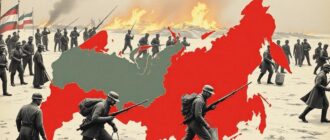
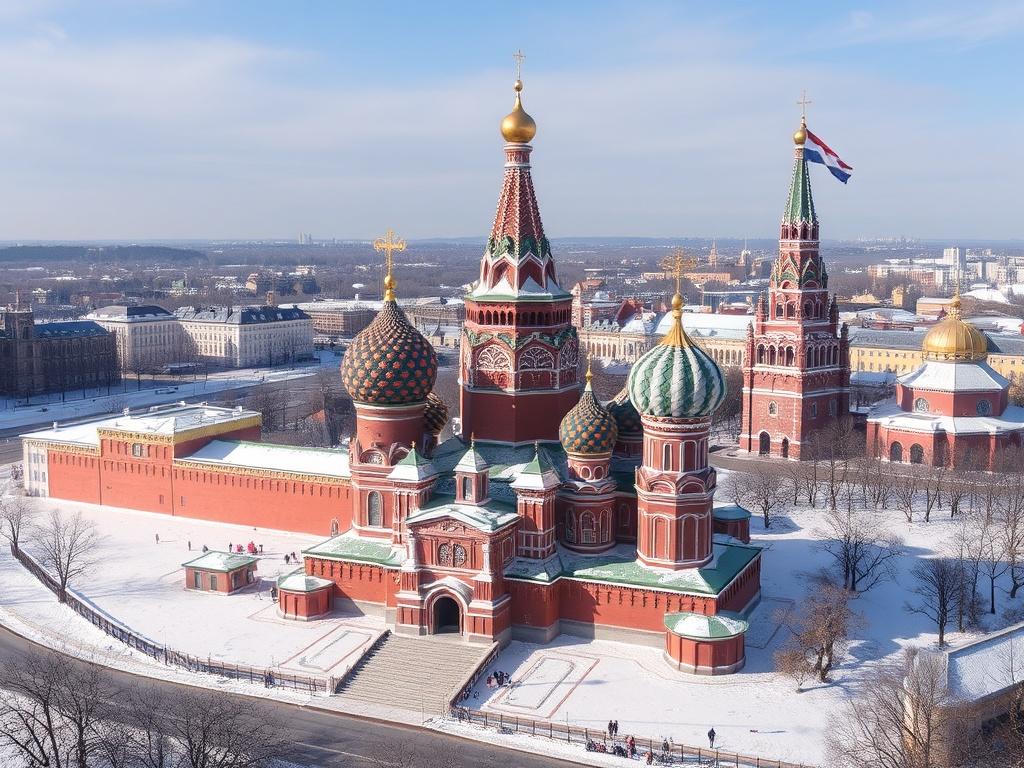
This article traces a long arc in Russian history—the ascent of Moscow from a modest appanage to the political and cultural hub that stitched together a sprawling realm. It’s a story of geography meeting ambition, of church and state leaning on each other, and of a city that transformed from a frontier outpost into a center that bound diverse lands into a single polity. This arc— Возвышение Москвы: от удела к центру объединения земель—is not simply about power, but about the making of a identity and a capital that would shape a nation’s future.
Origins: Moscow as a frontier outpost
Moscow’s earliest appearance in the written record sits at a pivot point of medieval Rus—an era when cities rose and fell on shifting fronts of power. The town’s fortress sat near the confluence of the Moscow and Neglinnaya rivers, a defensible site that offered merchants and princes a useful crossroads. In 1147, the chronicles note the harboring of Yuri Dolgoruky, a prince who sought both prestige and practical advantage by making Moscow a focal point of his ambitions. In those early years, Moscow functioned more as a relay point than a sovereign center, a place where lines of control extended outward rather than inward.
What helped that frontier status endure was timing and luck as much as planning. The voluminous theater of Kievan Rus fragmented into competing principalities, and Moscow found opportunity in the gaps between rival ambitions. Its location allowed it to benefit from trade routes along the Volga, the Oka, and the northern river systems, bringing in goods, artisans, and new ideas. The city did not explode onto the scene with one dramatic conquest; it grew gradually, a harboring city that learned to convert proximity into influence.
The era of appanages: division and rivalries
The broader pattern of medieval Russia was the division of land among branches of the ruling dynasty. In this system, Moscow entered as one of several appanage principalities—the offspring of Rurikid dynasts who governed their own fiefdoms while acknowledging a loose, ceremonial allegiance to more senior rulers. This fragmentation was not inherently a weakness; it was a machine that produced local governance, military cadres, and new urban forms. Yet it also sowed competition, because the prize of unification promised power, revenue, and prestige that could not be shared easily among rival branches.
From the outside, Moscow seemed modest, almost unassuming next to older centers like Kiev or Novgorod. But its rulers learned to read the balance of power with a hunter’s patience: cultivate loyal boyars, secure favorable trade terms, and avoid crippling conflicts with neighbors whenever possible. Within a few generations, Moscow began to press beyond its borders, not through spectacular battles alone, but through steady consolidation of lands, the assimilation of local elites, and the creation of a legal and religious framework that could bind diverse populations together under one crown.
Geography and commerce: Moscow’s edge
Geography mattered more than most chroniclers admit. Moscow stood astride broad rivers, yet kept itself out of the fiercest floodplains that plagued older trade centers. Its topography allowed for a defensible position while still enabling effective communication with other principalities. The city’s geographic advantages translated into economic leverage: merchants could move goods across frontiers with fewer bottlenecks, and newly minted towns could spring up with the Kremlin’s protection and a growing calendar of feasts and markets.
Commerce did not merely enrich Moscow; it bound the city into a wider web of exchange. Silver from the eastern steppes, furs from the north, and grain from the southern regions flowed through Moscow’s markets. This economic lifeblood equipped Moscow to finance fortifications, appoint able administrators, and fund clerical and cultural projects that would imprint a distinct Moscow-centered identity on the region. In effect, the city’s wealth created an enduring tool for drawing disparate lands into a single political orbit.
Turning point: from tribute to power
A decisive shift occurred when Moscow’s leaders learned to translate external pressure into internal legitimacy. The late medieval period saw formidable pressure from the Mongol-Tatar yoke, which, while coercive, also created incentives for centralization. By attracting and coordinating allied princes, Moscow could present itself as a bulwark against foreign domination while gradually diminishing the independent powers of rival principalities. The turning point came as the city’s rulers began to externalize power—collecting tribute, claiming rights to broader territories, and presenting the Moscow throne as the legitimate center of a future political order.
One of the most famous episodes in this long arc—the stand at the Ugra River in 1480—embodied the pivot from paying tribute to asserting sovereignty. For a time, the confrontation yielded no dramatic fireworks, but it symbolically announced that Moscow would not be merely a conduit for Mongol demands. The outcome hardened the sense that Moscow was the natural focal point for leadership and policy across diverse lands, a city whose interests extended beyond its own walls and into the wider fate of the realm.
Ivan III and the making of a centralized realm
The ascent culminated in the era of Ivan III, whose reign (approximately 1462–1505) fused military victory, political reform, and ideological ambition into a coherent project: to unify the Russian lands under a centralized state. He leveraged marriage alliances, notably with the Byzantine-educated and politically sophisticated figures who supported Moscow’s bid for primacy, and he exploited the frictions between rival principalities to turn Moscow into the arbiter of a new, united space. The annexation of surrounding lands—most notably Novgorod in 1478—began a cascade of consolidation that would define governance for centuries.
Economically and administratively, Ivan III launched a comprehensive program that reoriented authority toward the center. He built a stronger executive apparatus, reorganized the military, and embraced a more visible, centralized church structure in a way that reinforced the crown’s supremacy. The Moscow Kremlin became both fortress and capital, a practical seat of power and a potent symbol that linked the city’s spiritual and political ambitions. The union of title and territory under Moscow’s banner set the template for the future state: a single ruler, a clear center, and a growing empire of lands under a common crown.
Religion as a pillar of unity
The religious dimension of Moscow’s rise cannot be overlooked. The moving of the metropolitan seat to Moscow—historically solidified after the early 14th century and culminating in the establishment of a more autonomous church structure—gave the city spiritual primacy that complemented political authority. The church bound disparate peoples through a shared rite, calendar, and sacred geography. In times of famine, war, or reform, the clergy’s voice carried extra weight because it spoke a language of legitimacy that secular rulers could not easily challenge.
Over time, Moscow cultivated a self-concept as the spiritual heart of a wider polity. The creation of monumental churches, monasteries, and iconography around the capital reinforced the sense that Moscow was not simply a seat of power but a living center of faith. This spiritual framework helped to steady the realm through periods of transition, providing a cohesive narrative for subjects across diverse languages, customs, and landscapes. The church, in short, was a unifying instrument as much as a religious institution.
Expansion and consolidation: milestones of the 15th century
The 15th century was a period of rapid consolidation and bold expansion. Ivan III’s decisions reshaped political boundaries, recalibrated loyalties, and redefined who spoke for Moscow at the negotiating table. The annexation of territories in the northwest and the strengthening of Moscow’s role in trade and diplomacy created a feedback loop: central authority grew stronger as opportunity for local autonomy waned, and the city’s prestige rose as it absorbed more ground into a central, coherent state.
Militarily, Moscow’s leadership refined its approach to conquest and defense. The construction of a more capable militia, the modernization of fortifications, and the strategic use of marriage alliances and diplomacy allowed Moscow to project power beyond its walls. Culturally, the capital began to attract artisans, scholars, and administrators from across the land, which in turn enriched its institutions and prepared them for the complexities of a larger empire. It was not merely force that bound the lands together; it was a shared repertoire of rituals, laws, and symbols that Moscow gradually curated as common property for a growing federation.
Culture, architecture, and the image of Moscow
The urban landscape of Moscow tells a story about the city’s self-image and its ambitions. The Kremlin’s walls rose as a physical manifest of centralized authority; cathedrals and monasteries provided a visual language of religious gravity and cultural continuity. Architectural endeavors were not only about aesthetics; they served as political statements—statements about permanence, legitimacy, and the city’s role as custodian of a national memory. Each stone laid in those centuries carried a stake in Moscow’s future as a national center rather than a peripheral outpost.
Alongside religious architecture, secular buildings—bustling courthouses, merchants’ courts, and royal palaces—helped urbanize Moscow into a capital worthy of a growing state. The city became a stage on which diplomacy, taxation, and governance performed daily. In this sense, the built environment functioned as a three-dimensional code that citizens learned to read: it mapped power, protected wealth, and signaled Moscow’s readiness to steward a broader, more diverse realm.
Administration and the making of a centralized machine
Behind Moscow’s rising prestige lay a sophisticated administrative apparatus that stitched together disparate regions into a coherent state. Taxation, law, and military conscription were gradually flowing through centralized channels, with provincial authorities increasingly accountable to the crown. The central bureaucracy learned to translate local needs into imperial policy, and local elites had to navigate a new reality in which concessions and privileges still mattered, but only within a framework that elevated Moscow’s prerogatives.
Correspondence, record-keeping, and the codification of customary law created a national fabric to replace older, provincial arrangements. This was not a sudden revolution but a careful, incremental evolution—a process that gradually curbed the autonomous power of individual princes while preserving the local wisdom and networks that made governance possible. The result was a state that could mobilize resources, coordinate large-scale projects, and present a united front to both internal rivals and external pressures.
Table: key milestones and rulers in the rise of Moscow
| Ruler | Era | Key Actions | Impact |
|---|---|---|---|
| Yuri Dolgoruky | Mid-12th century | Established Moscow as a fortress and seat of power | Planted the seed of Moscow’s enduring political role |
| Ivan III (the Great) | Late 15th century | Consolidated lands, annexed Novgorod, reduced external influence | Formalized centralized state and laid groundwork for a unified realm |
| Numerous appanage princes | 12th–15th centuries | Competitive governance, gradual integration of lands | Created a diverse yet cooperative political environment |
Lessons from a city that bound a land
The rise of Moscow is instructive for how a city can, over time, redefine a region’s political psychology. It demonstrates the power of combining tangible leverage—fortifications, taxes, and military strength—with intangible forces—religious legitimacy, cultural narrative, and symbolic architecture. Moscow’s leaders understood that centralization is not merely a juridical act but a social project: it requires consent, collaboration, and a shared story that people can recognize as their own.
Investigation into this history reveals why centers matter as much as borders. A capital that can project stability gives its outlying communities confidence to invest, settle, and participate in a larger project. The story of Moscow’s ascent is thus as much about the people who lived through the shifts as it is about the rulers who orchestrated them. And it is a reminder that power, to endure, must be justified and reinforced across generations through law, faith, and shared aspiration.
Milestones in memory and identity
As Moscow grew into a metropolis that could claim legitimacy over lands, memory became a tool of state-building. Chroniclers codified events that highlighted Moscow’s central role, while artisans etched images of the city as the rightful heart of a civilizational project. The narrative of unification—of diverse dialects, customs, and loyalties—was told not only in scrolls and decrees but in churches, markets, and theaters that reinforced a common sense of belonging.
This process of memory-making was iterative. Each generation added a layer to the city’s mythos—of protection, stability, and a unique capacity to harmonize difference. The result was more than political expedience; it was a cultural synthesis that created a durable sense of Moscow as the center of lands drawn together under a single rule, a city whose story would echo through centuries of Russian history.
From medieval vigor to a modern city-state in embryo
By the dawn of the early modern era, Moscow had shifted from being a noble’s seat to a genuine city-state in embryo—an urban organism capable of sustained governance, broad diplomacy, and cultural production. Its institutions—the church, the court, the treasury, and the military—were now oriented toward a shared goal: to preserve unity as the land expanded, not simply to defend it against threat, but to shape its future trajectory. This shift did not erase regional identities; it reframed them within a larger, reconstructed political order that worked for a vast, diverse audience.
The city’s story also offers a window into how state power adapts to changing conditions. As technology, trade, and even climate alter the landscape, Moscow’s core practice—centralized coordination, trusted leadership, and a robust legal framework—remained a constant. In many ways, the medieval foundations laid by earlier rulers provided a reservoir of legitimacy that subsequent generations could draw upon when facing new challenges and opportunities.
Conclusion without a label: the enduring significance of Moscow’s ascent
Looking back, the ascent of Moscow from a small appanage to the center of unifying lands stands as a turning point not just in Russian history but in how a city can become the engine of a nation’s formation. It teaches that power is earned through a blend of strategic geography, economic vitality, religious legitimacy, and administrative craft. The legacy of this rise is visible every time Moscow is mentioned as the political and cultural nucleus of the land it bound together.
If you walk through the modern city or study its archives, you’ll sense the layers of decision and memory that created this center. The builders of Moscow did not merely seize land; they wove a narrative that could persuade a wide audience to align around a common future. In that sense, the city’s history is less a tale of conquest than a patient act of nation-making—one that continues to inform how Russia sees itself in the world today.
- Geography and trade served as the unseen wind that propelled Moscow’s ascent.
- Religious centralization reinforced political legitimacy and social cohesion.
- Administrative reforms converted local loyalties into a cohesive state machine.
- The unification of lands required patience, alliances, and the ability to translate diverse identities into a shared purpose.
As historians continue to revisit the centuries that shaped Moscow, the core lesson remains clear: a capital can rise not just by battles won and borders redrawn, but by the durable alignment of people, institutions, and memory. In the end, the city that began as an obscure outpost found its place as the compass for a sprawling land, guiding it toward a unified future—an enduring example of how a seat of power can become a center for unity across generations.