The transformation of Rus’ into a Christian realm did not happen in a single moment but unfolded as a decisive arc that touched politics, culture, and daily life. It reshaped how rulers governed, how people worshiped, and how a vast landscape connected with the wider Christian world. The story invites us to look beyond a ritual conversion and see a complex process that stitched together diplomacy, ideology, and art. The topic resonates today because it helped define a cultural space that would echo through centuries.
Scholars still debate Крещение Руси: причины, ход событий и последствия, a phrase that captures the many layers of change—from political calculation to spiritual shift. This article traces the motivations, maps the key moments, and surveys the lasting effects. By examining causes, chronology, and consequences, we can better understand how a diverse collection of principalities became part of an Orthodox Christian world.
Context: before Christianity in Rus’
In the lands that would become Rus’, religious life grew from a field of beliefs that blended ancestor veneration, nature spirits, and local cults. Sacred groves, idols, and seasonal rites linked communities to the cycles of harvest and war. The spiritual map was regional and fluid, with different tribes sustaining varied practices alongside shared myths.
Contacts with the wider Christian world arrived through trade routes along the Dnieper and Volga rivers, through military campaigns, and through cultural exchange with Byzantium. Missionaries and traders carried not only goods but ideas, manuscripts, and models of governance. Yet for many communities, pagan practices remained deeply rooted until a broader political and religious reorientation began to take hold in the late first millennium.
Why the reform? The reasons for Christianizing
Several intertwined motives pushed rulers toward embracing Christianity. Politically, a unified faith offered a tool for consolidating a loose federation of principalities into a more cohesive state structure. A shared religion helped legitimate authority, standardize laws, and coordinate governance across diverse lands that spoke related but distinct dialects.
Strategic alignment with Byzantium mattered as much as spiritual appeal. Dynastic marriage ties, trade partnerships, and the prestige of Constantinople provided a powerful incentive for adopting the Eastern Orthodox framework. The alliance also opened doors to Byzantine literacy, architectural models, and ecclesiastical organization that could bolster centralized rule in Kyiv and beyond.
Religious reform was also a civilizational project. Monasteries and churches became centers of learning, scribal culture, and charitable work. The new faith offered moral and legal codes, ritual calendars, and a sense of shared identity that could bind diverse communities under a common horizon. In that sense, Крещение Руси: причины, ход событий и последствия captures the confluence of political ingenuity and spiritual aspiration that guided the process.
The turning point: how the decision unfolded
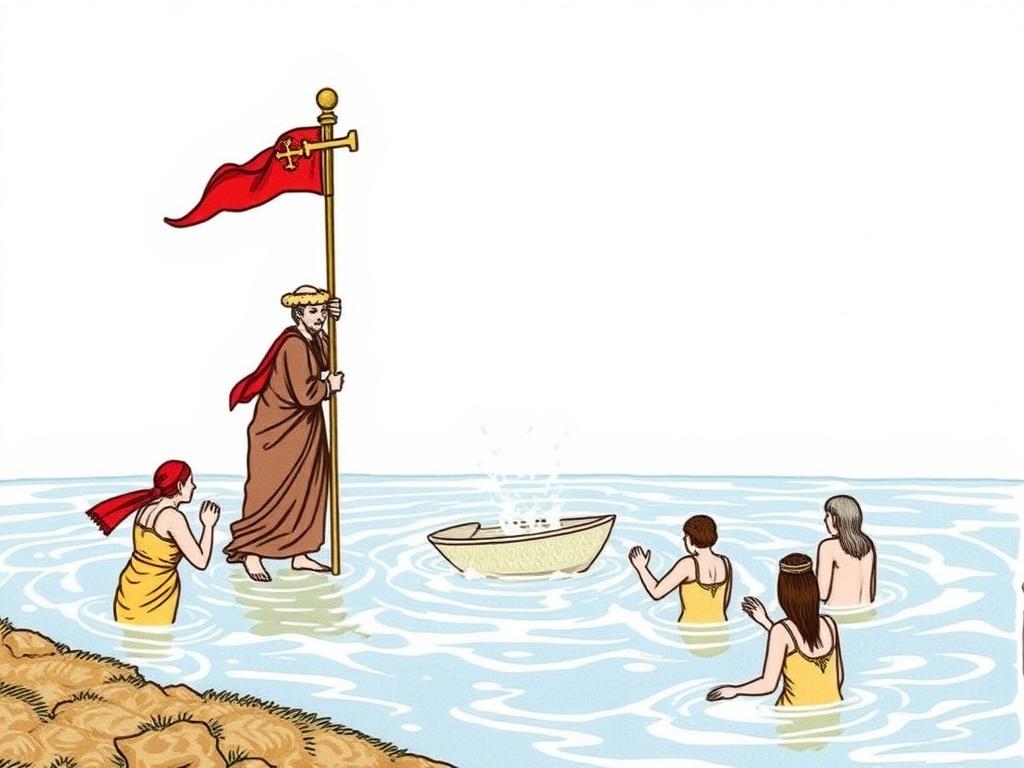
The pivotal moment centers on the actions of the ruling elites, especially Vladimir the Great, and his relationship with Byzantium. According to later chronicles, Vladimir traveled to the imperial city, stood at the gates of the Christian capital, and embraced the Orthodox faith. His baptism was a profound symbolic act that signaled a new trajectory for the realm and for Kyiv’s ruling house.
Following Vladimir’s baptism, a cascade of changes swept across the principalities. The acceptance of Christianity was not merely a personal conversion; it became a political program. Byzantium’s emissaries and church leaders helped organize a new ecclesiastical framework, and the capital’s religious and civil authorities moved toward standardization of worship, governance, and ritual life. The conversion propagated outward, and a wave of church-building and monastic founding followed, setting in motion a long-term transformation of public life.
As with any monumental shift, the narrative carries competing strands. Some traditions place the mass baptisms in the Kyiv region very soon after Vladimir’s own baptism, while others emphasize the long arc of Christianization that unfolded over decades. Regardless of precise chronology, the decisive change was clear: Christianity would shape law, education, and culture in ways that paganism could not sustain within the emerging medieval world.
Hod of events: milestones on the road to Christianization
To capture the arc, consider a concise sequence of milestones that mark the pathway from pagan roots to an established Orthodox framework. The following table highlights pivotal moments and their significance for the broader transformation.
| Year | Event | Significance |
|---|---|---|
| 988 | Vladimir’s baptism and the decision to adopt Christianity | Official turning point; sets the direction for state and church relations |
| Late 990s | Mass baptisms in Kiev and surrounding lands; establishment of churches | Widespread religious reform; creation of a liturgical and architectural footprint |
| 1054 | Great Schism between Eastern and Western Christianity | Affirmed Orthodoxy as the regional Christian identity; alignment with Byzantium persists |
| 13th–15th centuries | Mongol domination reshapes political life; church adapts | Orthodox institutions survive the upheaval; the church remains a stabilizing force |
| 1589 | Establishment of the Moscow Patriarchate | Shifts the center of gravity to Moscow; marks a new phase in church-state relations |
Consequences
The consequences of the Christianization of Rus’ extended far beyond the spiritual realm. They redefined political legitimacy, reoriented education, and reshaped cultural production. The adoption of Orthodoxy created a shared religious vocabulary that could harmonize diverse communities under a common calendar, liturgy, and moral code. Over time, the church became a central pillar of state power, education, and identity.
Religious reform brought about a sea change in social structures. Christian ethics influenced laws, festivals, and family life, while monastic communities became hubs of literacy and scholarship. The translation of liturgical texts into the local Slavonic idiom helped create a distinct church culture, one that married Byzantine liturgical forms to Slavic language and local sensibilities. In this way, faith and culture grew up together, reinforcing one another.
Political centralization
With Christianity as a unifying framework, rulers could articulate a sovereign mission that transcended kinship ties and tribal loyalties. The church offered a hierarchical structure that complemented the growing authority of princes, bishops, and metropolitan offices. This symbiosis fostered administrative centralization and created a more cohesive political entity that could mobilize resources for building projects, defense, and diplomacy.
In practice, church networks helped regulate landholding, tax collection, and public rites. The authority of the church—alongside the secular power of the princes—facilitated the integration of outlying towns and principalities into a recognizable political order. The result was a more durable framework for governance that outlived individual dynasties and town rivalries.
Cultural and educational shifts
Literacy moved from a limited clerical sphere into broader public life as monasteries and churches sponsored schools, manuscripts, and scriptoria. The Cyrillic script, which emerged in this milieu, became a lasting vehicle for religious and secular literature. The translation and creation of theological, legal, and historical texts laid the groundwork for later chronicles and chronicles-based literature.
Art and architecture also flourished under Christian influence. Stone churches rose across major centers, blending Byzantine planning with local aesthetics. Iconography, fresco cycles, and liturgical objects narrated biblical stories and saints in a way that reinforced communal memory and values. The spiritual language of Orthodoxy shaped not only worship but also the way people saw history, time, and community.
Religious and liturgical transformation
The Orthodox liturgical world introduced a new calendar, fasting regimes, feast days, and a distinctive daily rhythm of prayer. Liturgy in a vernacular-inflected Church Slavonic connected ordinary people to a distant sacred tradition, making religion feel immediate and alive. Icons and liturgical music became central to worship, guiding devotion and aesthetic sensibilities across generations.
As church governance took shape, canonical law—often written and enforced by bishops and metropolitans—started to function as a public instruction framework. This legal and spiritual order helped resolve disputes, regulate marriage and property, and define the responsibilities of rulers toward their subjects and the faith itself.
Architectural and artistic impact
Architecture experienced a revolution as wooden churches gave way to stone structures that endured through centuries. Bells, domes, and ornate iconostasis defined city skylines and country churches alike. The art of icon painting advanced, producing images that taught theology through symbols and storytelling, a practice that inspired generations of artists and craftsmen.
Long-term impact: shaping Russian identity
Christianization did not merely replace old rites with new ones; it infused a new logic into political culture, education, and self-understanding. A powerful argument emerged that linked the region’s destiny with the Christian East, especially Byzantium, which in turn shaped how rulers imagined legitimacy and power. In this narrative, the faith became a civilizational backbone for the medieval states that would succeed Kievan Rus’.
Over time that religious identity grew into a broader public consciousness. The Orthodox Church helped articulate a sense of mission and place—first as a bridge to Byzantium and later, in the centuries that followed, as a proxy to the evolving Russian state. The continuity of liturgy, iconography, and church law created a cultural memory that later generations would reclaim, reinterpret, and sometimes contest as political conditions shifted.
Legacy and debates among historians
Historians still debate when and how precisely the conversion took hold across all Rus’ lands. Some scholars emphasize the centralized act under Vladimir as the decisive event, while others stress a more gradual, bottom-up process that extended into the Novgorod and Pskov regions and beyond. The reliability of primary sources—chiefl y the Primary Chronicle—warrants careful assessment, given its blend of history, legend, and political rhetoric.
Additionally, the geographic and chronological boundaries of the Christianization are topics of ongoing discussion. The role of local princes, regional church authorities, and international patrons varied from place to place, creating a mosaic rather than a single uniform campaign. The late emergence of Moscow as a religious center and the eventual establishment of the Moscow Patriarchate add another layer to the conversation about how and when Orthodoxy became the dominant faith across the realm.
Modern reflections: faith, memory, and identity
In contemporary scholarship and public memory, the Christianization of Rus’ is often treated as a foundational moment that helped shape a distinctly East Slavic Christian civilization. It is remembered for its role in building institutions, enabling cross-cultural exchange with Byzantium, and giving rise to a tradition of monumental architecture and sacred art that continues to captivate scholars and travelers alike. The event is not merely a historical milestone; it is a living thread in the regional conversation about faith and heritage.
Discussions about the period today also reflect evolving perspectives on national identity and religious pluralism. The process of conversion interacted with local customs, languages, and political ambitions in ways that produced a durable hybrid: a Slavic Orthodox culture that could speak to the world while maintaining its own distinct voice. In that sense, Крещение Руси: причины, ход событий и последствия remains a productive lens for examining how faith and power intersected in early medieval Europe.
Ultimately, the story of the christianization of Rus’ invites readers to consider how big ideas spread and how a faith can bend a landscape without erasing its existing people and traditions. It is a reminder that belief, law, art, and diplomacy do not travel in isolation; they travel together, reshaping the world in the act of joining it. The legacy endures in churches, liturgical books, and the cultural memory that continues to influence the region’s religious and political conversations today.
From a personal vantage point as a writer and observer of history, the narrative reveals how a single decision—rooted in a complex web of motives—can ripple through centuries. The story of the christianization of Rus’ shows that great transformations are rarely singular acts but gatherings of intentions, pressures, and opportunities that accumulate into a durable turn of history. And as with any history worth telling, the most important takeaway is the living complexity: a people, a faith, and a landscape forever altered by a moment of turning toward a new horizon.
In the end, Крещение Руси: причины, ход событий и последствия invites us to look not only at dates and names but at the human processes behind them—the negotiation of power, the hunger for knowledge, the longing to belong to a broader story. The Christianization of Rus’ did not erase the past; it re-sited it, so that the region could move forward with a shared, if contested, sense of purpose. The result was a new order that persisted through dynasties, revolutions, and the changing tides of history—an order that remains a touchstone for scholars and readers who seek to understand how faith can shape a civilization.